Rejection sensitive dysphoria doesn't get cured. Here is how I live with it.
There is a message on my phone that has gone unanswered since last night. I know it without looking. Part of my brain has been keeping count, in the background, for nineteen hours. That is what living with rejection sensitive dysphoria is: not big dramatic scenes, an invisible and exhausting bookkeeping of every sign that someone, somewhere, might be pulling away.

I have already written about what RSD is and why it sticks to ADHD, and there is a 12-question test if you want to put a word on what you live. This article is the sequel I looked for everywhere when I discovered the term: fine, it has a name, now what do we do? Here is what I do. Not what one should do, what I do, failures included.
In the moment: the three moves that change everything
Name the storm. It is the simplest move and the one that took me the most years. When the remark lands, or the silence stretches, there is a window of a few seconds before the emotion takes up all the space. In that window, I say, sometimes out loud: it's the storm. Not "he hates me", not "I ruined everything". The storm. That word does one precise thing: it separates what I feel from what is true. The intensity does not drop right away, but it stops being reliable information about reality.
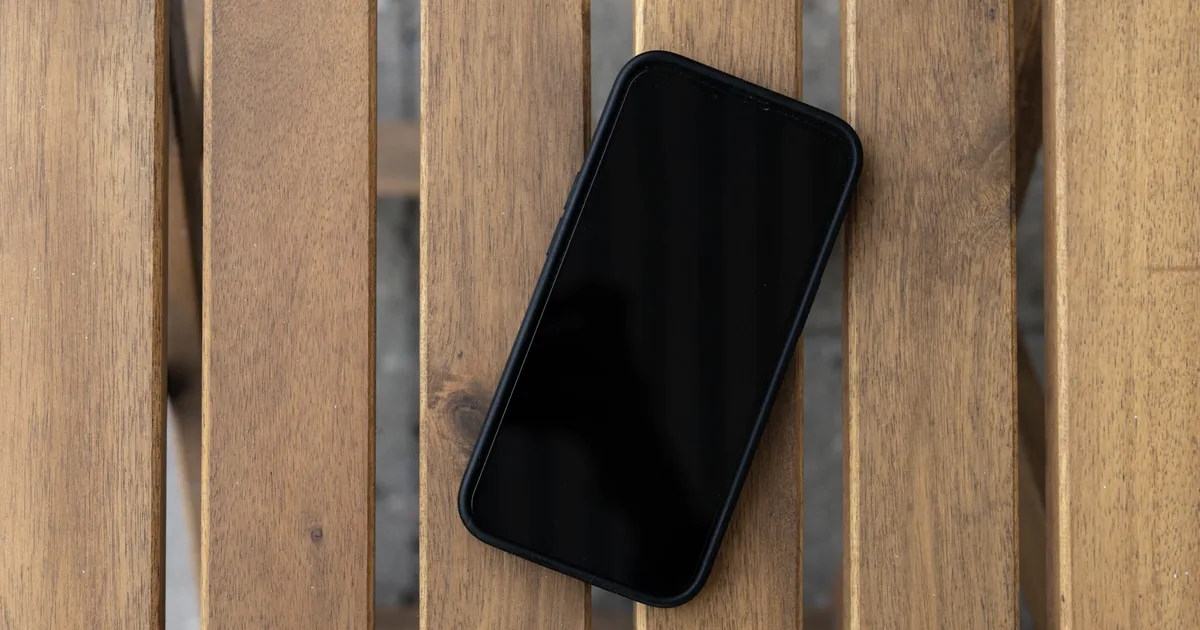
Send nothing from the peak. It is my strictest rule, because it is the one I have broken the most. The three-paragraph message written at midnight to "clear things up". The mental resignation letter drafted on the subway. The looping apologies for something nobody had noticed. Everything I have ever sent from the peak of the storm, I have regretted. Now I write if I need to, in my notes, never in the send bar. And I give myself a delay: nothing goes out before the next day. The RSD storm has a property I only understood late: it always comes down. Not because the problem got solved, because that is its nature. An emotion, even a monstrous one, is a wave, not a climate.
Discharge through the body. RSD is not just a thought, it is a physiological activation, the famous hollow in the chest. And a physiological activation cannot be reasoned with, it has to be discharged. For me, that is walking. Fast, outside, no destination, sometimes with music too loud. Thirty minutes of walking do what two hours of motionless rumination never will. It is not self-help, it is plumbing: adrenaline needs a motor outlet.
On the ground floor: what reduced the frequency of storms
The three moves above manage the crisis. They do not change the terrain. What changed the terrain, for me, comes down to three long projects, and none of them is quick.
Understanding where it comes from. RSD does not come out of nowhere. In my case, it rests on two layers that reinforce each other: the emotional dysregulation of ADHD (Barkley calls it DESR, and Shaw and colleagues have argued since 2014 for putting it back at the center of the adult ADHD picture) and an anxious attachment built long before the diagnosis. Untangling the two has been the most useful work of my adult life, and I told part of it in what my relationships taught me about attachment. Concretely: therapy. CBT for the catastrophic scenarios and the avoidance, attachment work for what replays in close relationships. I will not pretend it is pleasant. It is effective, which is better.
Taking the ADHD seriously. RSD is rarely alone: in most people who live it intensely, it sits within ADHD. And the emotional picture moves when the ADHD is taken care of, whether through treatment (a conversation for your doctor, not for me) or through everything else: sleep, exercise, structure. Dodson also mentions results with alpha-2 agonists, off-label for this use. I cite it because it is documented, not because I recommend it: I have never taken them, and it is exactly the kind of decision that gets made in an office.
Reading the right things. On RSD specifically, the most useful thing I have read remains the chapter Hallowell and Ratey devote to it in ADHD 2.0: two psychiatrists with ADHD themselves, who describe the storm from the inside without dramatizing or minimizing it. I wrote a full review, and if you would rather go straight to the book, you can find it here.
What did not work, to be honest
Reasoning with the emotion during the storm. Repeating "this is irrational, calm down" at the peak of a crisis is like debating a fire alarm. The arguments come later, once it has come down. During, there is only the body and time.
Reassurance on a loop. Asking "are we okay?" soothes for three hours and worsens for three months. Every reassurance obtained teaches the brain that the doubt was legitimate, and the doubt comes back faster. It is a classic anxious attachment pattern, and removing it from my relationships did more than all the reassurance I ever received.
Waiting for it to disappear. The sensitivity itself does not leave. I am still the person who feels a chill in an "ok" that is too short. What changed is everything between the perception and the catastrophe: the name put on it, the delay, the people I explained the mechanism to. The storm still passes through. It no longer governs me.
Frequently asked questions
Is there a treatment for rejection sensitive dysphoria?
No official treatment: RSD is not in the DSM-5. The documented paths go through the bigger picture: managing an underlying ADHD, CBT or attachment-focused therapy, and according to Dodson the alpha-2 agonists, off-label. All of it gets decided with a doctor.
How do you handle an episode in the moment?
Three moves: name the storm to separate it from reality, send and decide nothing while the intensity peaks, and discharge the activation through the body (walk, move). The worst reflex is acting from the peak.
Does rejection sensitive dysphoria go away with time?
The baseline sensitivity does not seem to disappear, but the frequency and duration of storms drop sharply once you recognize them, once the ADHD is treated and the attachment is worked through. You don't cure the sensitivity, you defuse the crises.
Do you need medication for RSD?
No medication has RSD as an indication. Treating an underlying ADHD softens emotional dysregulation in a share of patients, and Dodson reports results with alpha-2 agonists, off-label. To discuss with a psychiatrist trained in adult ADHD.
What kind of therapy helps with rejection sensitivity?
CBT for the catastrophic scenarios and the avoidance, and attachment-focused approaches, because rejection sensitivity overlaps heavily with anxious attachment (Mikulincer and Shaver, 2007). If RSD sits within ADHD, a therapist trained in adult ADHD is a real plus.
References
- Dodson, W. W. Clinical articles on rejection sensitive dysphoria. ADDitude Magazine. additudemag.com
- Downey, G. & Feldman, S. I. (1996). Implications of rejection sensitivity for intimate relationships. Journal of Personality and Social Psychology, 70(6), 1327-1343.
- Shaw, P., Stringaris, A., Nigg, J. & Leibenluft, E. (2014). Emotion dysregulation in attention deficit hyperactivity disorder. American Journal of Psychiatry, 171(3), 276-293. PubMed
- Surman, C. B. H. et al. (2011). Deficient emotional self-regulation and adult attention deficit hyperactivity disorder: a family risk analysis. American Journal of Psychiatry, 168(6), 617-623. PubMed
- Mikulincer, M. & Shaver, P. R. (2007). Attachment in Adulthood: Structure, Dynamics, and Change. Guilford Press.
- Hallowell, E. M. & Ratey, J. J. (2021). ADHD 2.0. Ballantine Books. (Chapter on RSD and emotional dysregulation.)