ADHD and diet: what I changed, what the research says
It was 4pm and I had not eaten
anything all day.
Again. It was a Tuesday in February. I had been in front of my screen since 9am, in hyperfocus on something that did not even matter particularly. At 4:12pm, my hands started trembling slightly. The kind of slight tremor you only notice when you try to type something precise. My stomach was not screaming for food. My stomach had said nothing all day. That is the problem.
ADHD is not limited to attention and concentration. It affects your relationship with food in a way nobody really talks about. Forgetting to eat. Eating whatever because hunger arrives suddenly and you want something now. Opening the fridge six times without taking anything because the brain does not know what it wants.
And then there is the medication. Ritalin and other stimulants suppress appetite in most people. So you have a brain that already forgets to eat, plus a medication that kills hunger. The combination is rough.

What is the basic problem?
Eating regularly requires planning. Figuring out groceries. Cooking. Remembering it is noon. Remembering it is 7pm. All things that rely on working memory, time perception, and the ability to interrupt an ongoing task. Three things the ADHD brain does badly.
The result is a pattern I know by heart. No breakfast (or a coffee, which does not count). No lunch because "I will eat in five minutes" at 12:30 becomes nothing at 3pm. Then violent hunger around 4-5pm leading to eating whatever is immediately available. Cookies. Bread. Sugary stuff. Then a decent dinner or not. And the cycle starts over.
This pattern is terrible for ADHD. Blood sugar spikes and crashes amplify symptoms. When your blood sugar drops, your concentration drops with it. Your emotional regulation too. You become more irritable, more scattered, more vulnerable to starting paralysis. Eating irregularly does not cause ADHD. But it makes it worse.
Why protein in the morning?

This is the thing that made the biggest difference. I did not expect it.
For years, my breakfast, when I had one, was cereal or bread. Pure carbs. Blood sugar spike, crash two hours later, and the start of the day was shot.
I started eating eggs in the morning. Or Greek yogurt with nuts. Or leftovers from last night's dinner (yes, eating pesto pasta at 8am works). Protein. The change took about a week to become visible. My mornings were more stable. Not spectacularly better. But the 10:30am dip, that moment when the fog usually arrived, softened.
Nigg (2012) published a meta-analysis on the link between diet and ADHD. His conclusions are cautious, as good research should be. But protein at breakfast comes up often in the literature as one of the few dietary changes with an observable effect on attention and mood stability. The likely reason: proteins are precursors to dopamine and norepinephrine, the two neurotransmitters involved in ADHD.
It is not a miracle. On mornings when I eat protein, I am maybe 15 or 20% more functional in the first hours. That is modest. But 15% better every morning adds up.
What is the problem with sugar?
Sugar and ADHD have a toxic relationship. The ADHD brain craves dopamine. Sugar provides it. Quickly. Easily. That is why we are drawn to sugary things like magnets. The problem is that the spike is followed by a crash, and the crash worsens all symptoms.
I tried cutting refined sugar for six weeks, early 2025. It was hard the first four days. Really hard. Physical cravings, extreme irritability, mental fog even worse than usual. Then it settled. Around the second week, I noticed my afternoons were more even. Less of those post-lunch fog phases where you stare at the screen and nothing goes in.
I did not hold the full six weeks without any sugar. Let me be honest. I cracked on a Saturday night with dessert at a friend's place, and it reminded me that "cutting completely" is not viable for me. What is viable is reducing. Replacing soda with sparkling water. Grabbing fruit instead of a cookie when the 4pm hunger hits. Small adjustments that do not require monk-like willpower.
The research is mixed on sugar and ADHD. The popular idea that "sugar makes kids hyperactive" is not supported by studies (Wolraich et al., 1995, demonstrated that fairly clearly). But the effect of sugar on blood glucose and attention regulation is real. It is not that sugar causes ADHD symptoms. It is that it destabilizes a system that is already fragile.
Why does coffee make me tired if I have ADHD?
If coffee makes you tired or calm instead of waking you up, you are not alone. Caffeine blocks adenosine, the molecule that signals fatigue to the brain. In many people with ADHD, coffee brings a paradoxical calm rather than a jolt, because it acts on an already particular dopamine system. And when the effect fades, the accumulated adenosine returns at once.
Coffee and ADHD have a strange relationship, and I live it every day. Some mornings, an espresso settles me, almost makes me drowsy. Other times, it speeds me up and scatters me. It is not in my head, and it is not a contradiction.
Here is what happens, simply. Caffeine does not create energy. It masks fatigue by sitting in place of adenosine, which builds up through the day and eventually tells the brain "time to slow down." As long as caffeine is there, the signal is muffled. When it clears, adenosine floods back, and the dip feels harsher than before the coffee. That is the classic caffeine crash.
On an ADHD brain, there is an extra layer. Caffeine is a mild stimulant, and since ADHD stimulant medications act on dopamine, many people with ADHD describe a calming effect from coffee rather than an exciting one. This paradoxical calm is exactly what whole forums describe. It does not mean coffee "treats" ADHD. It means it touches a system that reacts differently.
And then there is sleep, which changes everything. If you sleep badly, your adenosine debt is already huge on waking. Coffee masks it for a while, then the fatigue comes back, stronger. Most ADHD adults sleep poorly. Coffee then becomes a patch over a sleep problem, and the patch ends up tiring you out.
What helps me concretely: not drinking coffee right on waking, waiting an hour or two. Cutting caffeine in early afternoon, never later. And remembering that if I need coffee to function, it is often a sleep signal, not a caffeine shortage. On the combination that works best for focus, L-theanine added to coffee, I cover it on the nootropics page.
What foods to avoid, and how to support dopamine?
There is no forbidden food with ADHD. But a few families destabilize an already fragile brain: refined sugar and fast carbs, excess caffeine late in the day, and meals made only of fast carbs with no protein. Conversely, proteins supply tyrosine, the raw material for dopamine.
The foods that destabilize
I do not like lists of demonized foods. Food guilt is heavy enough when you have ADHD. But a few food families make symptoms harder to live with, and it is useful to know: refined sugar and fast carbs, because spikes and crashes in blood sugar pull attention and mood down; soda and energy drinks, which combine sugar and caffeine; and the most common trap, the all-carb meal with no protein (the bowl of cereal, the plain baguette, the plate of plain pasta) that gives an energy boost then a hole.
The topic of artificial colorants and additives comes up often. Nigg et al.'s (2012) meta-analysis shows an effect, but a modest one, and mainly in children. For an adult, it is probably not the priority. Meal regularity and the carb-to-protein balance matter much more.
Dopamine and the plate
You read everywhere that you should "increase your dopamine" when you have ADHD. That is a shortcut. You do not inject dopamine with a food. What you can do is supply its precursors. Tyrosine is the amino acid the body uses to build dopamine and norepinephrine. You find it in eggs, cheese, meat, fish, legumes, nuts.
Concretely, supporting the dopamine system through food does not look like a magic superfood. It looks like regular meals, protein spread through the day, and blood sugar that does not ride a rollercoaster. It is less marketable than a miracle cure, but it is what holds over time. The dopamine topic goes beyond the plate: I also cover it on the brain side on the ADHD page.
And an honest note: no food treats ADHD, and no list of foods to avoid makes it disappear. Diet makes the ground more stable or less stable. It supports. If you are still unsure about a treatment, that is decided with a doctor, not with a plate.
Do omega-3s actually work?
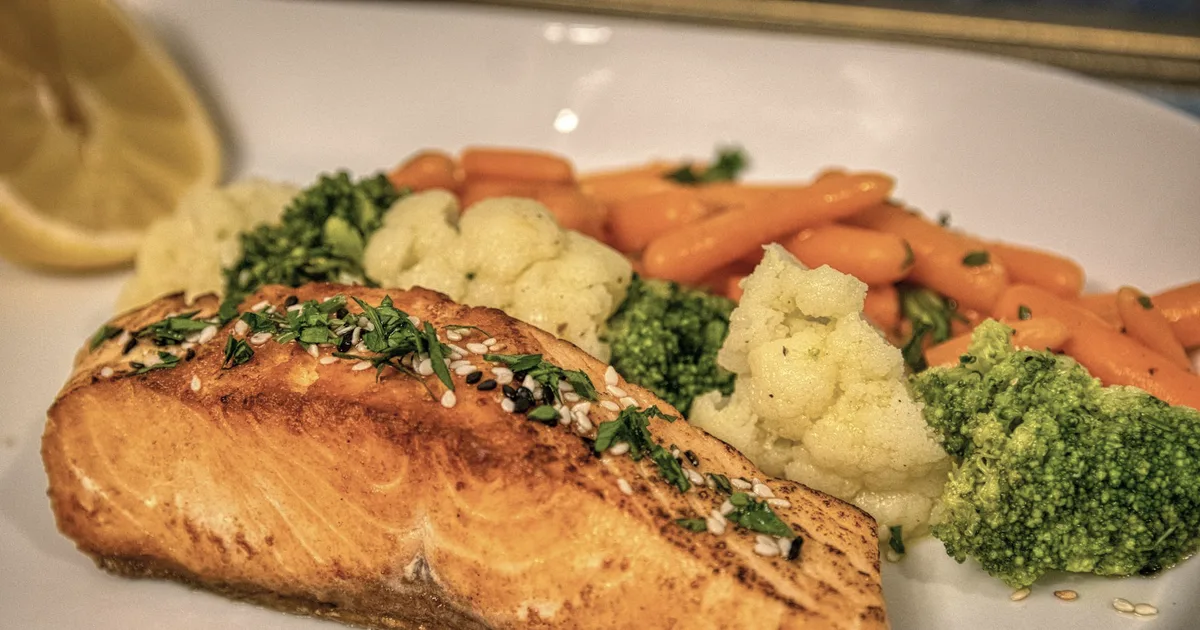
I have been taking them daily for a little over a year. Fish oil capsules, 1000mg EPA/DHA. The fishy taste in the burps is unpleasant, I will say that.
Faraone et al. (2015), in a large meta-analysis on ADHD treatments, include omega-3s among interventions with evidence of benefit. The effect is modest. Much more modest than stimulants. But it is measurable, reproducible, and omega-3s have virtually no side effects.
What I have observed personally: honestly, I am not sure. The problem with supplements is that the effect is too subtle to isolate. Am I concentrating better because of the omega-3s, or because I am sleeping better these past months, or because I am exercising more? I cannot separate the variables. Nobody can, in their own life.
I keep taking them because the cost-to-risk ratio is good. It costs a few dollars a month. The risks are virtually zero. And if the research says it helps a little, even modestly, why not.
Do "miracle" diets work?
We need to talk about this.
On TikTok, on Instagram, everywhere, you find people claiming that a specific diet "cured" their ADHD. Gluten-free. The Feingold diet (no additives or colorants). Keto. Cutting dairy. And each testimonial is convincing when you read it, especially at 2am when you are looking for answers.
Here is what the research says, as honestly as possible.
The Feingold diet (eliminating artificial colorants and certain additives) has modest evidence in children. Nigg et al.'s (2012) meta-analysis shows a small effect. Small. And primarily in children, not adults. That is not nothing. But it is not what social media makes of it.
Gluten-free for ADHD: no solid evidence. Unless you have a real gluten sensitivity (diagnosed celiac disease or non-celiac sensitivity), removing gluten will probably not change your ADHD symptoms. I say probably because science never says never. But the current data does not support this approach.
The keto diet: preliminary studies on animal models. In humans, almost nothing specific to ADHD. Not enough to recommend anything.
What bothers me about miracle diets is not that people try them. It is when they replace a treatment that works. I read on a forum about someone who stopped their Ritalin to go gluten-free, and who was doing much worse three months later. Diet can complement a treatment. It cannot replace it. Not with the data we have today.
What do I actually eat?
I am not going to give you a meal plan. That would be dishonest. My eating is chaotic. Less than before. But chaotic still.
Morning, when it goes well: two eggs, some bread, coffee. When it does not: just coffee, telling myself I will eat later. "Later" falls into "not now" and you know how that goes.
Lunch: if I cooked the night before, I eat leftovers. If I did not cook, it is either a sandwich or nothing. On hyperfocus days, lunch does not exist. It disappears. I do not see it pass.
Evening: this is usually my best meal. Because the accumulated hunger eventually becomes strong enough to interrupt even hyperfocus. I cook simple things. Pasta, rice, vegetables, chicken. Last Tuesday, I ate pesto pasta at 9:30pm because I had forgotten dinner. Again.
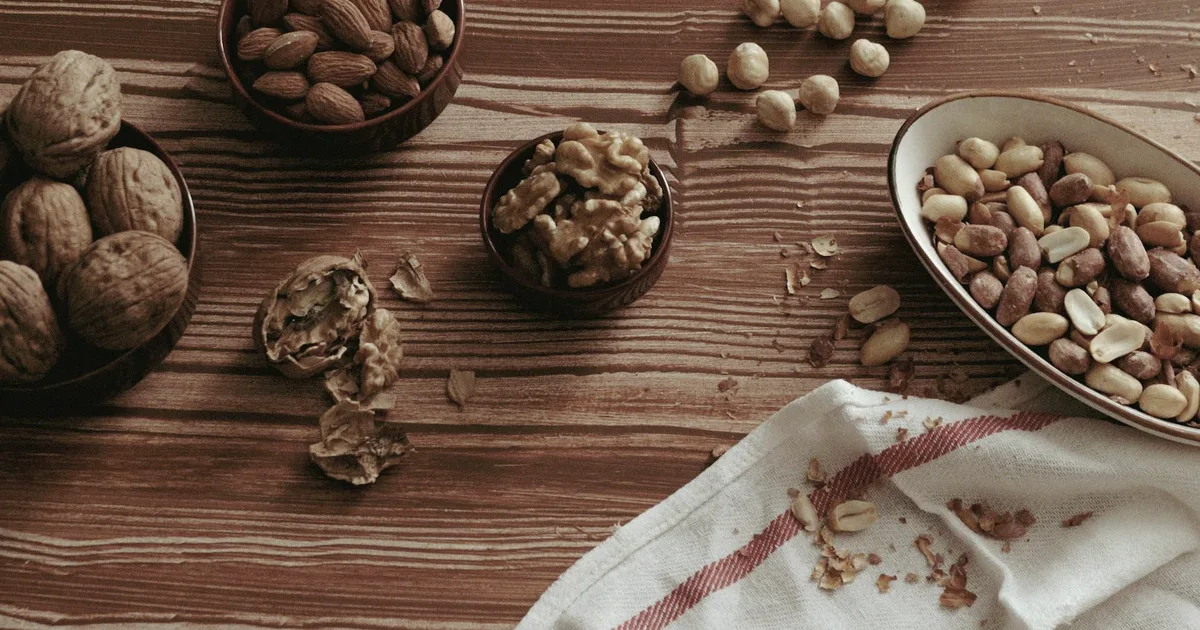
What helps me concretely: having easy-to-eat things in the fridge that need no preparation. Nuts. Fruit. Cheese. Hard-boiled eggs. Things I can grab when my brain refuses to cook. Not because it is optimal. Because it is realistic.
Sunday batch cooking, I manage about twice a month. When I manage it, the following week is better. When I do not, I no longer beat myself up about it (it took me a while to stop). I do what I can with the brain I have.
What should you eat when you have ADHD?
What is the best diet for ADHD?
Protein at breakfast made the biggest difference for me: eggs, Greek yogurt, nuts. Nigg (2012) confirms proteins are precursors of dopamine and norepinephrine. Cutting refined sugar also steadies the afternoons. And high-dose omega-3 has modest but measurable evidence according to Faraone et al. (2015).
What foods should you avoid with ADHD?
There is no forbidden food, but a few families destabilize an ADHD brain: refined sugar and fast carbs, because of blood sugar spikes and crashes; soda and excess caffeine late in the day; meals made only of fast carbs with no protein. Artificial food colorants mainly concern children, with a modest effect per Nigg et al. (2012).
Why does coffee make me tired if I have ADHD?
This is a common experience. Caffeine blocks adenosine, the molecule that signals fatigue. In many people with ADHD, coffee brings a paradoxical calm rather than a jolt, because it acts on an already particular dopamine system. When the effect fades, accumulated adenosine returns at once and the tiredness feels stronger. Poor sleep amplifies all of it.
Does caffeine make people with ADHD sleepy?
For some, yes. Caffeine is a mild stimulant, and because ADHD stimulant medications act on dopamine, many people with ADHD describe a calming, even sleepy effect from coffee instead of an energizing one. It does not mean coffee treats ADHD. It means it touches a system that reacts differently.
How can you increase dopamine through food with ADHD?
You do not raise dopamine directly with a food, but you supply its precursors. Tyrosine, found in eggs, cheese, meat, fish and legumes, is the raw material for dopamine and norepinephrine. Eating protein at breakfast and steadying blood sugar supports that system rather than shaking it.
Why do people with ADHD forget to eat?
Eating regularly requires planning, time perception and the ability to interrupt an ongoing task. Three things the ADHD brain does badly. In hyperfocus, noon disappears. And stimulants like Ritalin also suppress appetite. My trick: a 12:30pm alarm that says "eat something".
Do gluten-free or keto diets help ADHD?
Current data does not support it. Gluten-free has no solid evidence for ADHD, except with a diagnosed gluten sensitivity. The keto diet has almost no ADHD-specific human studies. Diet can complement a treatment, but it cannot replace it.
References
- Nigg, J. T. et al. (2012). Meta-analysis of attention-deficit/hyperactivity disorder or attention-deficit/hyperactivity disorder symptoms, restriction diet, and synthetic food color additives. Journal of the American Academy of Child & Adolescent Psychiatry, 51(1), 86-97. PubMed
- Faraone, S. V. et al. (2015). Attention-deficit/hyperactivity disorder. Nature Reviews Disease Primers, 1, 15020. PubMed
- Ferré, S. (2008). An update on the mechanisms of the psychostimulant effects of caffeine. Journal of Neurochemistry, 105(4), 1067-1079. PubMed
- Wolraich, M. L. et al. (1995). The effect of sugar on behavior or cognition in children: a meta-analysis. JAMA, 274(20), 1617-1621. PubMed