Half of the ADHD population
stayed invisible for decades.
When I got diagnosed with ADHD at 33, I thought that was late. Then I talked to women with ADHD around me. Many were diagnosed after 30. Some after 40. One of them was 52 when a psychiatrist finally put the word on it. She had been treated for anxiety and depression for twenty-five years. ADHD had been there from the start. Nobody had looked for it.
I am a man. My experience of ADHD is a male experience. But the women with ADHD I know have taught me something I would not have understood on my own: the same condition, in a woman's body, in a society that expects different things from women than from men, produces a completely different experience. And a much, much later diagnosis.
Why do women fly under the radar?
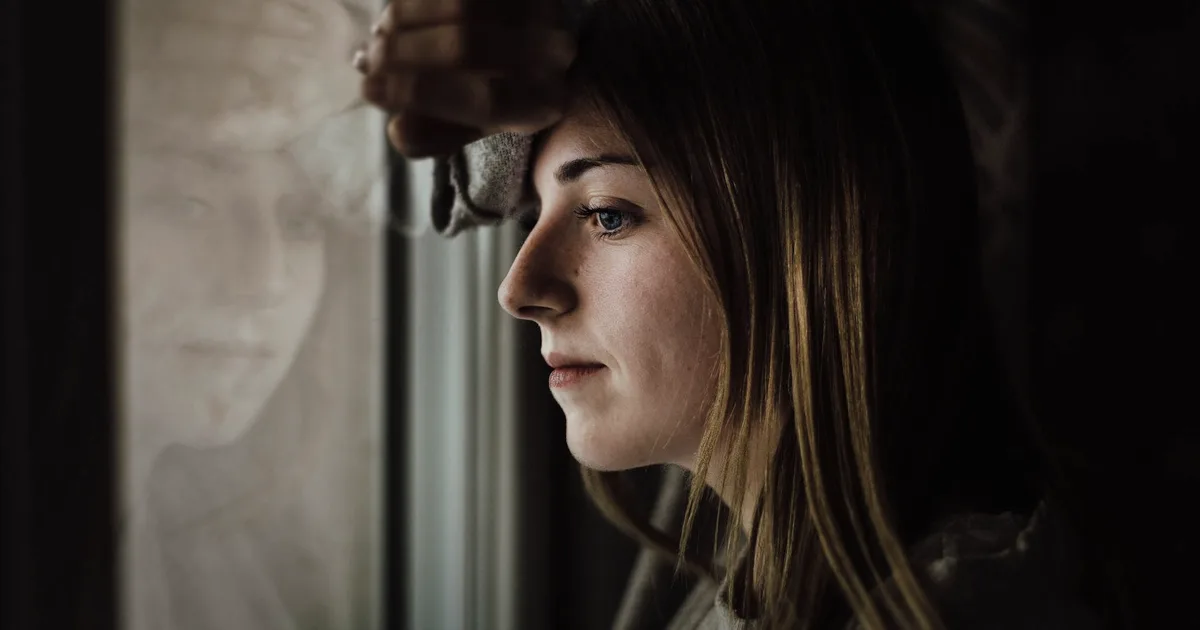
ADHD in women often presents as inattentive: mental disorganization, chronic fatigue, hyperactivity internalized as racing thoughts. Female socialization reinforces masking, which delays diagnosis by years. Many women are first diagnosed with anxiety or depression before ADHD is identified.
ADHD was studied for decades on boys. White, hyperactive boys who disrupted class. That is the profile that shaped the diagnostic criteria, the rating scales, the training of doctors. Stephen Hinshaw published one of the first major longitudinal studies on girls with ADHD in 2002. What he found: girls had comparable levels of suffering to boys, but they were massively under-identified because their symptoms did not match the stereotype.
Biederman, that same year, showed that women with ADHD had higher rates of comorbidities (anxiety, depression, eating disorders) than men with ADHD. Not because the condition is more severe in women. Because it went undiagnosed longer, and the consequences piled up.
The problem is structural. Teachers notice a boy who moves constantly and interrupts. They do not notice a girl who stares out the window and turns in her homework late but correctly. The boy gets sent to the school doctor. The girl gets labeled a "daydreamer" or "scatterbrained." She learns very early that to be accepted, she has to compensate. And she compensates.
What do ADHD symptoms look like in adult women?
The symptoms of ADHD in adult women are mostly internal: a mind that never stops, forgetfulness that piles up, a disorganization hidden through sheer effort, a fatigue that does not match the sleep. That is why ADHD in women is hard to spot from the outside, and why so many women stay undiagnosed.
The women with ADHD I have listened to do not describe a boy who cannot sit still. They describe something else. I cannot speak about it from the inside, so I am gathering here what comes up most often in their stories and in what I have read. Treat this as a map of ADHD signs in women, not a test. A list diagnoses no one.
- A brain that runs nonstop, thoughts chaining one after another, sometimes intrusive thoughts that are hard to switch off.
- Forgetfulness that hurts: a missed appointment, a broken promise, a message left unanswered for three weeks.
- Chronic disorganization lived as a moral failing rather than as a symptom.
- Trouble starting boring tasks, and the sense of having to drag yourself through the day.
- Strong emotional sensitivity, reactions that look out of proportion from outside but are felt at full volume inside.
- A background fatigue that sleep does not fix, because it comes from the constant effort of compensation.
- Procrastination followed by hyperfocus sprints, often at night, to catch up on what did not get done.
- Self-esteem worn down by years of being told you are smart but do not try hard enough.
If you are looking for an ADHD-in-women checklist, this is roughly it. But no list replaces an assessment. These signs can also belong to anxiety, depression, or burnout. It is precisely because they overlap that ADHD in women goes unseen for so long. I cover the symptoms of the condition in general on the ADHD symptoms page.
Why does the inattentive profile go unseen?
ADHD comes in three presentations: predominantly hyperactive, predominantly inattentive, and combined. Women are overrepresented in the inattentive type. And the inattentive type is the one that makes no noise.
No visible motor restlessness. No disruptive classroom behavior. Instead: thoughts going in every direction, a constant difficulty focusing on anything that is not stimulating, repeated forgetfulness, chronic mental disorganization, an exhausting effort to follow long conversations.
From the outside, it looks like distraction. Like laziness, sometimes. Like a lack of motivation. But on the inside, it is a brain pedaling nonstop to stay afloat, compensating with intelligence or sheer effort, and burning out without anyone seeing it.
I have combined-type ADHD. The hyperactivity, in my case, is visible. People around me can see that something runs differently. The women I know who have inattentive ADHD did not have that "luck." Nobody saw anything. Until it cracked.
How does masking work?
Masking is the set of strategies a neurodivergent person develops to appear neurotypical. Everyone with ADHD does it to some degree. But women often do it earlier, more intensely, and for longer.
Female socialization has a lot to do with it. Girls are taught to be calm, organized, attentive to others. To not cause trouble. A girl with ADHD receives these messages and understands very young, around 7 or 8 from what I have been told, that her natural behaviors are not acceptable. So she adapts. She builds compensation systems before she even knows she is compensating for something.

The result is women who seem functional. Who hold down homes, jobs, social lives. But who, in private, are exhausted. Who need time alone to recover from the effort of appearing normal. Who develop anxiety because permanent masking generates a constant fear of being found out.
This is also what creates the profile sometimes called high-functioning ADHD. From the outside, a woman with ADHD can have a life that looks solid: degrees, a job, a family. The masking has become so effective that it makes the condition invisible, including to doctors. Doing well on the outside does not mean being well. It often means paying a price nobody sees.
A friend told me once: "Nobody believes I have ADHD, because I learned to hide it too well." That paradox is central. The better you compensate, the less people believe you when you say you are struggling.
What role do hormones play?
This is the topic I knew the least about and that struck me the most when I started looking into it. Female hormones interact directly with dopamine. Estrogen, in particular, affects the dopaminergic system. When estrogen levels drop, ADHD symptoms get worse.
Haimov-Kochman and Berger (2014) documented these interactions. In practical terms: ADHD symptoms fluctuate across the menstrual cycle. The week before a period, when estrogen drops, many women with ADHD report a significant worsening of inattention, emotional dysregulation, and fatigue.
PMS and PMDD
Several women with ADHD described the same thing to me, without knowing each other: in the days before their period, it is as if their ADHD turns up a notch. More brain fog, more irritability, more tears, a mind even harder to manage than usual. Premenstrual syndrome affects many women, but it seems to hit harder when ADHD is already there.
When that worsening becomes severe enough to disrupt life every month, it is called premenstrual dysphoric disorder, PMDD. The literature suggests PMDD is more common in women with ADHD. I am not a doctor and I will not draw the line between strong PMS and PMDD: that is a professional's job. What I can say is that a woman who notices her symptoms track her cycle has every right to bring it up with her doctor and not be told it is all in her head.
Pregnancy changes things too. Some women see their symptoms decrease during pregnancy thanks to the rise in estrogen. Then the postpartum period, with its sudden hormonal crash, sometimes triggers the first visible crisis. Women who had held it together until then, with their masking and strategies, break down after giving birth. And they get diagnosed with postpartum depression. The ADHD underneath stays invisible.
And then there is perimenopause, then menopause. Perimenopause is the transition that can start as early as 40: estrogen does not drop all at once, it becomes unstable, swinging up and down. Women who had managed their ADHD their whole lives find themselves overwhelmed at 45 or 50, with focus and memory giving out. Many blame it on age or stress. And sometimes that is when the ADHD diagnosis finally happens. After decades.
I want to be honest about the limits of what I am writing here. The research on hormones and female ADHD is still young, and I am not the right person to advise on hormone therapy or a dose adjustment. What I can do is name the link, so a woman who lives it knows she is not making it up and can raise it with a doctor who knows her file.
ADHD, motherhood and the mental load
Several of the women with ADHD I know are also mothers. They described the same invisible work to me: holding the running list of appointments, school supplies, birthday gifts, groceries, paperwork, while their ADHD brain already struggles to hold one thing at a time.

Being an ADHD mom does not make someone a less loving parent. It makes the logistics of motherhood far more expensive, and the guilt far heavier. A working memory that drops things, a sense of time that slips, a household that never feels caught up: this is the daily reality for a lot of moms with ADHD. And because they keep the facade going, almost nobody around them sees the cost.
Postpartum is also where many of these stories crack open. The hormonal crash after birth, the sleep loss, the sudden mountain of new tasks: the strategies that held for years stop holding. The breakdown gets read as postpartum depression, and the ADHD underneath stays unnamed. If you became a mother and feel like something broke that you cannot explain, ADHD is worth asking about.
Why does the diagnosis come so late?
The pattern I have seen repeat itself among the women around me is almost always the same. It starts with anxiety. Or depression. Or both. They seek help. They get diagnosed with generalized anxiety, a depressive episode, an eating disorder. They are prescribed antidepressants or anxiolytics. It helps a little. Not completely. The root problem keeps running underneath, invisible.
Then one day, often by chance, they stumble on an article, a video, a testimony about female ADHD. And everything clicks. They recognize themselves in every line. They go back to their doctor. And sometimes the doctor takes them seriously. Sometimes not. "You cannot have ADHD, you went to college." "You are not hyperactive." "It is just anxiety."
The road to a diagnosis is already hard for men. For women, it is harder. Because you have to convince a doctor who learned that ADHD is an eight-year-old boy who cannot sit still. Not a 35-year-old woman with a master's degree and two kids.
This late diagnosis has consequences. Years of internalized shame. Years of believing you are lazy, disorganized, not enough. Relationships damaged by behaviors you could not understand yourself. Emotional dysregulation read as instability when it actually has an explanation, which I cover on the ADHD and emotions page. The diagnosis does not repair those years. But it allows you to stop blaming yourself. On what an unrecognized ADHD costs over a lifetime, I wrote a whole page: undiagnosed ADHD in adults.
What do I observe around me?
Since my own diagnosis, several women in my life have been diagnosed with ADHD. My partner. Two close friends. The sister of a friend. I do not claim my experience is representative. But what I have seen has struck me.
They all, without exception, had a facade that worked. From the outside, everything was fine. They had jobs, relationships, social lives. Some had leadership positions. But behind the scenes, it was chaos. Nights spent catching up on what had not been done during the day. Crying from exhaustion. The permanent guilt of not doing enough when they were already doing too much.
What I also observed is the relief at the moment of diagnosis. Identical to what I had felt, but amplified by the duration. The longer you spent without knowing, the more physical the relief when you finally understand. And the more intense the anger too. The anger of having lost years. One of my friends told me she cried for two days after her diagnosis, at 38. Not from sadness. From rage.
My partner told me after her diagnosis: "If someone had told me at 20, I would have made completely different choices." Not necessarily better choices. But choices made with full knowledge of who she was. That is what a late diagnosis steals: the ability to choose while knowing yourself.
ADHD and autism in women: a pairing that often gets missed
ADHD and autism overlap far more than people thought twenty years ago. The same person can have both. And in women, both are underdiagnosed, for reasons that look alike: intense masking, and diagnostic criteria historically built on male profiles.
A woman who is both autistic and has ADHD (sometimes called an AuDHD profile) can stay under the radar even longer. The two ways of functioning compensate for and mask each other. Autism reaches for routine and predictability, ADHD reaches for novelty and stimulation: from the outside, that can look like someone who is simply contradictory or hard work, without anyone naming what is going on.
I am not autistic and I will not pretend to describe that experience from the inside. What I want to flag is this: if you recognize yourself in female ADHD but some pieces do not quite fit, strong sensory sensitivity, a deep need for routines, huge social fatigue, it is worth raising the question of autism with a professional who knows both. A specialist assessment exists for that. I also cover it on the twice-exceptional page.
Do you recognize yourself in what you just read?
First: what you are feeling right now is valid. If you see yourself in these descriptions, it is not self-suggestion. It might be the beginning of an understanding of yourself that will change your life.
The next step is to talk to a professional. A psychiatrist trained in adult ADHD, ideally. They are rare, but they exist. If your doctor dismisses your symptoms or tells you that you cannot have ADHD because you finished college, find a different doctor. You are not the problem. Their training is.
While waiting for an appointment (the wait is often several months): Sari Solden's "Women with Attention Deficit Disorder" is a good starting point. It was one of the first books to focus specifically on women's experience of ADHD.
And if you have a friend, a sister, a colleague who fits what you read here: send them this link. Not by saying "I think you have ADHD." By saying "I read this, it made me think of you, do with it what you will." That is how my partner started her own journey. A link. Sent one evening. Nothing more.
Common questions
What are the symptoms of ADHD in adult women?
Mostly internal signs: a mind that never stops, frequent forgetfulness, chronic disorganization, strong emotional sensitivity, and a background fatigue tied to compensation. Hyperactivity, when it exists, is often internalized as racing thoughts rather than visible restlessness.
Why is ADHD underdiagnosed in women?
The diagnostic criteria were built from studies done mostly on hyperactive boys. Women, more often inattentive type and compensating through socialization, fly under the radar. Many are first diagnosed with anxiety or depression before ADHD is identified.
Do ADHD symptoms get worse before a period?
Many women with ADHD describe worse inattention, irritability and fatigue in the week before their period, when estrogen drops. When that worsening is severe, it is called premenstrual dysphoric disorder (PMDD), which appears more common in women with ADHD. Only a doctor can make that diagnosis.
How does menopause affect ADHD?
The lasting drop in estrogen during perimenopause and menopause can surface ADHD symptoms that were previously masked. Women who had coped their whole lives feel overwhelmed at 45 or 50. That is sometimes when the diagnosis finally happens.
Can you have ADHD and still be high-functioning?
Yes. Many women with ADHD have degrees, jobs and families. This is sometimes called high-functioning ADHD: the facade holds through an exhausting effort of compensation. Doing well on the outside does not erase the condition and does not rule out a diagnosis.
Can a woman have both ADHD and autism?
Yes. ADHD and autism overlap often, and in women both are underdiagnosed for similar reasons: intense masking and criteria historically built on male profiles. When both are present, it is sometimes called an AuDHD profile. A specialist assessment is needed to tell them apart.
How does a woman get diagnosed with ADHD?
The ideal is to see a psychiatrist trained in adult ADHD. If a doctor dismisses your symptoms because you finished college or because you are not visibly hyperactive, find a different doctor. The problem is their training, not you.
ADD and ADHD in women: is it the same thing?
Yes, in everyday language. ADD is the old term (Attention Deficit Disorder, without the H for hyperactivity), used before the DSM merged all presentations under ADHD. Many women still say ADD because their profile is inattentive without visible hyperactivity. Medically, it is now called predominantly inattentive ADHD. The condition is the same, the official name changed.
References
- Quinn, P. O., & Madhoo, M. (2014). A review of attention-deficit/hyperactivity disorder in women and girls: uncovering this hidden diagnosis. The Primary Care Companion for CNS Disorders, 16(3). PubMed
- Young, S., Adamo, N., Asherson, P., et al. (2020). Females with ADHD: an expert consensus statement. BMC Psychiatry, 20, 404. PubMed
- Hinshaw, S. P., Owens, E. B., Zalecki, C., et al. (2012). Prospective follow-up of girls with attention-deficit/hyperactivity disorder into early adulthood. Journal of Consulting and Clinical Psychology, 80(6), 1041-1051. PubMed
- National Institute of Mental Health (NIMH). Attention-Deficit/Hyperactivity Disorder. Health topic overview.