If you are reading this, it is for your child.
I was that child.
I am not a child psychiatrist. I am not a parent either. I am an adult diagnosed with ADHD at 33, who spent his whole childhood without anyone naming what was wrong. At school, I was the one they described as bright, but does not try. I heard that sentence dozens of times. It stuck.
If you are looking for answers about your child's ADHD, I cannot give you a diagnosis. But I can tell you what it feels like, from the inside, to be that child. And I can tell you that your worry, the fact that you are searching, already matters. No one searched for me. It would have changed everything.

What does ADHD look like in a child?
ADHD in children shows up through two broad groups of signs. Inattention: the child daydreams, forgets, loses things, gets distracted by everything, struggles to finish what they start, seems not to listen when spoken to. Hyperactivity and impulsivity: constant movement, getting up in class, interrupting, answering before the question is finished, struggling to wait, acting before thinking.
Some children have mostly inattention. Others mostly restlessness. Many have both, which is the combined presentation. None of these is more or less ADHD than the others. It is the same wiring, expressed in different ways.
The nuance that matters
Every child is sometimes distracted, restless or impulsive. That is normal. To point to ADHD, the difficulties must appear before age 12, last over time, show up in at least two different settings, home and school for example, and genuinely get in the child's way. A child who moves a lot but learns well, has friends and feels good does not necessarily have ADHD.
And ADHD is not only an attention problem. It is also harder emotional regulation. Frustration spikes fast and hard, anger floods over a setback that looks tiny from the outside. I go into that in more detail on the page about ADHD symptoms, because the emotional side is often what wears a household down the most.
The signs by age
ADHD does not look the same at 3 and at 11. That is one reason it is spotted so late so often.

Babies and infants (before age 3)
ADHD is not diagnosed in a baby or a 2 year old. At that age, restlessness and the need to move are normal. Some parents describe a very intense temperament, difficult sleep, a lot of movement. That can raise questions, but it does not say anything yet. If you have concerns about your infant's development, it is your pediatrician who looks at the whole picture, not an ADHD grid.
Ages 3 to 5
In preschool, some signs become a little clearer: the child struggles to stay seated for an activity, jumps from one game to another, copes badly with frustration, seems more impulsive than peers. Even here, caution. At 3 or 4, many children are like this. A diagnosis stays rare before age 6 and needs long observation.
Primary school age (6 to 11)
This is the age when ADHD most often becomes visible. School asks the child to sit still, follow instructions, organize, finish work. That is exactly where things break down. The child daydreams in class, forgets their things, struggles to get started, or disrupts, gets up, talks. Their grades do not reflect their intelligence. This is when you hear the sentence that followed me: they could do it, they just do not try.
Adolescence and puberty
In adolescence, physical hyperactivity often eases. It gives way to a more inner restlessness, trouble with organization, time and deadlines. Self-esteem is often bruised by years of remarks. Teen ADHD can hide behind low motivation, opposition, sometimes anxiety. It does not disappear. It changes face.
How is a child diagnosed?
You will find free ADHD questionnaires for children online: the Conners rating scales, the SNAP-IV, forms filled in by parents and teachers. They are useful. They give an indication, they help you decide whether to seek an assessment. But no free questionnaire makes a diagnosis. ADHD is not diagnosed with a form.
Who to see
The path often starts with the family doctor or pediatrician, who can refer you to a specialist in childhood ADHD: a child psychiatrist or a pediatric neurologist. Depending on the situation, a neuropsychological assessment and a speech and language evaluation round out the picture. Guidelines, from the CDC and others, recommend a structured, multi-step process, precisely to avoid getting it wrong.
What the doctor looks at
The diagnosis rests on an in-depth clinical interview, the child's history since they were small, questionnaires filled in across several settings, and ruling out other causes: sleep disorders, learning disabilities such as dyslexia, anxiety, vision or hearing problems. ADHD often comes with other conditions, which is why the assessment takes time.
That time can be frustrating. Waits for a specialist appointment are sometimes long. But a diagnosis made carefully is worth more than a label slapped on fast. If you want to understand the logic of this process, I also walk through it on the adult side, on the ADHD diagnosis page.
ADHD and school
School is where ADHD hurts the most. Not because school is cruel, but because it is built for a brain that can sit still, wait, follow a long instruction, manage its time. The ADHD brain does all of that at a huge cost. I ended up leaving school early. Not out of laziness. Out of exhaustion from fighting a system that was not built for me.
What helps in the classroom
In practical terms, to help a child with ADHD in class: a seat near the teacher and away from windows, short and ideally written instructions, assessments broken into small steps, allowed movement or pause breaks, extra time for tests, and the right to fidget a little without it being treated as a fault. Nothing dramatic. Simple adjustments that change a whole day.
Formal support plans
In the United States, these adjustments can be formalized through a 504 Plan, which sets up accommodations, or an IEP, an Individualized Education Program, when the child qualifies for special education services. In other countries the names differ, a PAP or PPS in France for example, but the idea is the same: write down what the child needs so it does not depend on goodwill alone. It is the school team, the school health staff and you who build it together.
One thing worth keeping in mind: in the large majority of cases, a child with ADHD does not need a special school. They need an ordinary school that supports them. That is part of what the diagnosis is for: shifting how the institution sees the child, moving them from bad student to student who works differently.
When you are out of patience, because it happens
If you feel you have no patience left for your ADHD child, it does not make you a bad parent. It means you are exhausted and under-supported. The meltdowns, the opposition, the noise, the repeated forgetting: that wears anyone down. Recognizing that exhaustion is the first step toward feeling better, not an admission of failure.
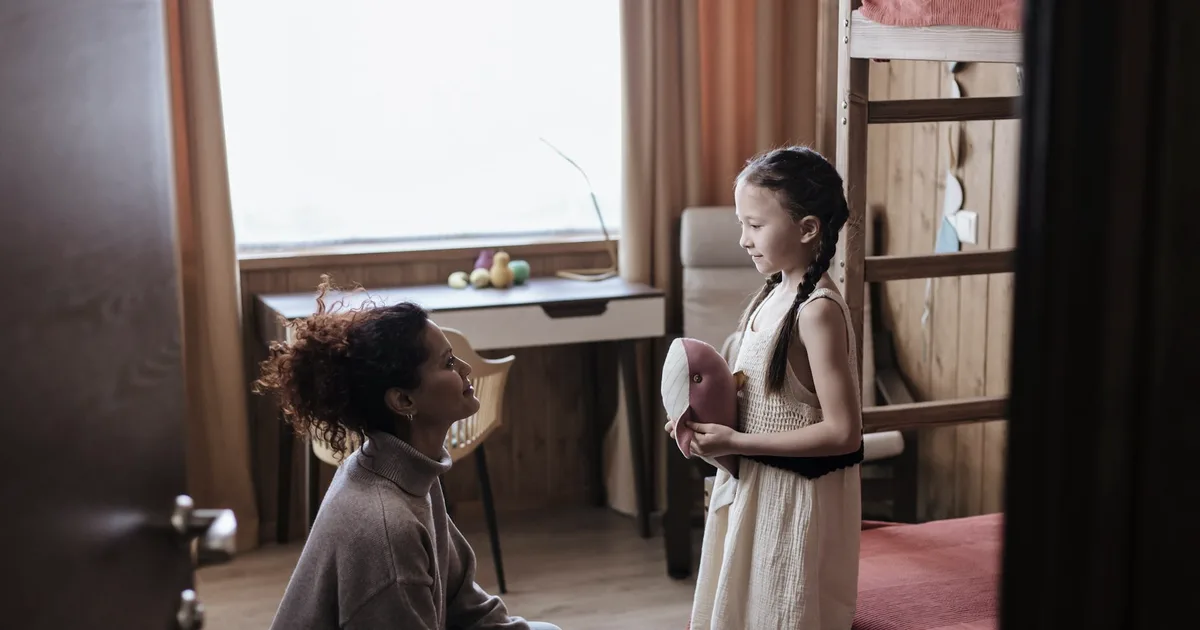
I am not a parent, so I will not pretend I know what you are going through. I do not. But I was the child on the other side. And I can tell you one thing: when my behavior overflowed, it was never aimed at the adult. It was not contempt, not calculated provocation. It was a brain that could not brake. The anger that spiked from zero to a hundred in seconds, I was caught in it as much as everyone around me was.
When a child with ADHD hits, shouts, slams doors, it is not that they do not love you. It is that they are overflowing and do not yet have the tools to do otherwise. Standard punishment works poorly on this wiring, because the problem is not willpower, it is regulation. What helps more: clear and stable rules, immediate rather than delayed consequences, a lot of positive reinforcement when things go well, and calm moments planned before the pot boils over.
And you, in all of this
You are allowed to be tired. You are allowed to step back. Getting help from a professional, following a parent training program, joining a support group for parents of children with ADHD: these are not failures, they are footholds. Many parents describe real relief the day they discover they are not alone and that their child's behavior has an explanation. The diagnosis does not change the child overnight, but it changes the way they are seen, by you and by others.
What I wish people had understood
I wish people had understood that I was trying. Trying hard, invisibly. That sitting still and listening cost me an energy other children did not have to spend. When I was told I did not try, it was not only wrong, it was unknowingly cruel. It taught me to believe that I was the problem.
I wish people had also seen what worked. The ADHD brain can focus for eight hours on what it loves and zero minutes on the rest. Both are true. A child with ADHD is neither a creative genius nor a hopeless case. It is a child who works differently, with real strengths and real difficulties. Reducing them to their grades means missing the actual child.
And I wish someone had told me early. Not to pin a label on me, but to give me words. Understanding at 33 why school had been so hard is relief mixed with anger. Your child can grow up with those words starting now. It does not remove the ADHD. It removes the shame that should never have been added to it. You can read more about that overflow on the page about ADHD and emotions.
You do not have a broken child. You have a child who is wired differently. And the fact that you are here, reading this, is already part of what will help them. If you want the wider picture of how this wiring works, the page on what ADHD really is is a good next step.
Frequently asked questions
What are the signs of ADHD in children?
Two groups of signs: inattention (daydreaming, forgetting, distraction, unfinished tasks, lost belongings) and hyperactivity-impulsivity (constant movement, interrupting, struggling to wait, acting without thinking). To point to ADHD, these signs must appear before age 12, last over time, show up in at least two settings, and genuinely get in the way.
Is there a free ADHD questionnaire for a child?
Yes, free questionnaires exist, such as the Conners rating scales or the SNAP-IV, filled in by parents and teachers. They give an indication, not a diagnosis. Only a doctor can diagnose ADHD after a full evaluation.
Can ADHD be diagnosed in babies and infants?
No. ADHD is not diagnosed in babies or infants. Before age 3, high energy and short attention are normal. Most children are diagnosed between 6 and 12, when school makes the difficulties visible.
How do you discipline a child with ADHD?
Calmly, clearly and consistently. Standard punishment often falls flat because the issue is regulation, not willpower. What helps more: stable rules, immediate consequences, plenty of positive reinforcement, and calm-down moments planned before the child boils over.
What can I do if I have no patience left for my ADHD child?
Feeling out of patience does not make you a bad parent: it is a sign of exhaustion and missing support. Get help from a professional, join a parent support group, allow yourself breaks, pursue the diagnosis. The child's behavior is not aimed at you.
Can a child with ADHD be quiet and dreamy?
Yes. The inattentive presentation, more common in girls, shows up as a calm, dreamy child who is slow to start work and tunes out quietly. These children disturb no one and are spotted late. A quiet child who struggles deserves as much attention as a restless one.
Does childhood ADHD go away with age?
Not really. Physical hyperactivity often eases in adolescence, but inattention, organization difficulties and emotional regulation problems persist into adulthood for most people. A child supported early reaches adulthood better equipped.
References
- Centers for Disease Control and Prevention (CDC). Attention-Deficit / Hyperactivity Disorder (ADHD) in children. cdc.gov
- National Institute of Mental Health (NIMH). Attention-Deficit / Hyperactivity Disorder in children and teens: what you need to know. nimh.nih.gov
- American Academy of Pediatrics (2019). Clinical practice guideline for the diagnosis, evaluation, and treatment of ADHD in children and adolescents. Pediatrics, 144(4). publications.aap.org