I was sceptical.
I still am, partly.
When I stopped Ritalin, I started looking for alternatives. Nootropics appeared everywhere in my searches. Supplements that "boost your brain." Stacks that "improve focus." Proprietary formulas that "optimise cognitive performance."
My first instinct was distrust. A lot of marketing, not much proof. Influencers selling capsules with promo codes. Studies funded by the manufacturers themselves. I almost gave up before starting.
But curiosity won. And after more than a year of testing, reading, and daily notes, I have a more nuanced picture. Some things worked for me. Most did nothing. And the line between the two is often blurrier than you would like.
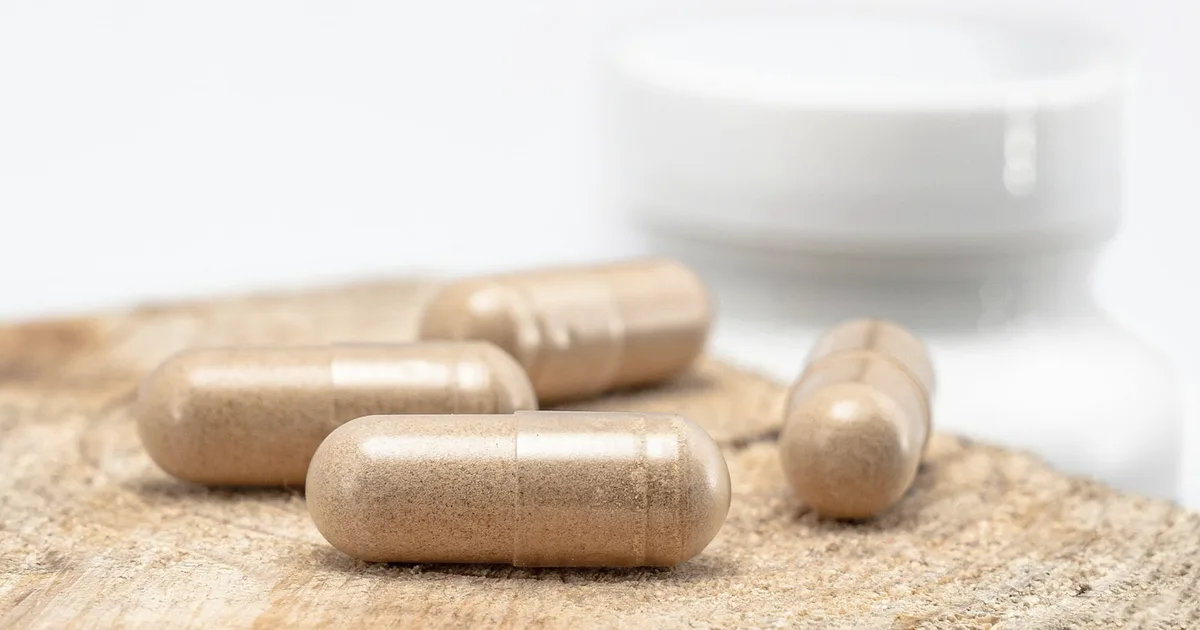
What did I test?

Each test lasted at least six weeks. I did not see the point of testing something for ten days and drawing conclusions. The brain needs time to respond to a supplement, and the placebo effect generally fades after two to three weeks. My notes were daily: subjective focus level, quality of task initiation, sleep, mood.
This is not a scientific method. It is N=1. A sample of one. Me. What works for me may do nothing for you. Keep that in mind.
Vyvamind. This is the one that had the most effect on me. Around the third week, I noticed I was starting tasks I usually put off. Not easily, but without the internal fight that normally takes me an hour. The effect is subtle. It is not Ritalin. It is not a switch you flip. It is more like the barrier to getting started is a bit lower. I still take it. I wrote a full Vyvamind review with week-by-week notes.
Lion's Mane. The mushroom everyone talks about. I noticed an improvement in verbal clarity after a few weeks. In long conversations, I was finding my words more easily. I am not certain it was the Lion's Mane specifically, it coincided with a period of better sleep. I keep taking it as a precaution.
Mind Lab Pro. A complete "stack," meaning a mix of several molecules in one capsule. The effect took three weeks to appear. What I noted: a better ability to sustain attention on long, boring tasks. Emails, admin work. The things my ADHD brain hates. The effect is real but modest.
L-Theanine + Caffeine. The simplest and cheapest combination. L-Theanine is an amino acid found in tea. Combined with caffeine, it produces calm focus without the jitteriness of coffee alone. It is the only nootropic with real double-blind studies behind it. I use it daily.
Qualia Mind. Nothing. Six weeks. No perceptible effect. The smell of the capsules made the protocol unpleasant. Maybe it works for other people. For me, no.
Omega-3 (EPA/DHA). Not a nootropic in the strict sense, but the research on the link between omega-3 and ADHD is interesting. Faraone included omega-3 in his reviews of complementary treatments. The effect is slow, probably several months. I take them every day. It is a long-term investment more than an immediate fix.
What does the science actually say?
Let me be clear. The level of evidence for nootropics is not comparable to medication. Methylphenidate has decades of randomised, controlled, double-blind studies. Most nootropics have at best a few small studies, often funded by the manufacturers.
What has solid evidence. Caffeine (modest effect on attention, well documented). L-Theanine combined with caffeine (a few double-blind studies showing an effect on attention and a reduction in caffeine-induced anxiety). High-dose omega-3 (modest but measurable effect on ADHD symptoms according to several meta-analyses).
What has promising leads but not enough data. Lion's Mane (interesting animal studies on neurogenesis, a few small human studies). Bacopa Monnieri (a few positive studies on memory in healthy adults, not specifically ADHD). Rhodiola Rosea (an adaptogen with some data on mental fatigue).
What is mostly marketing. Proprietary stacks where you do not know the doses. "Exclusive" formulas with no publications. Products that promise effects within days. If a supplement has a real effect on cognition, it takes time. Anything that claims to work immediately is either disguised caffeine or placebo.
Does saffron actually help ADHD?
Saffron is the most studied herb for ADHD. Several clinical trials compared it to methylphenidate in children with ADHD and found similar efficacy over eight weeks. But these are small, mostly pediatric studies, and saffron stays a serious lead among supplements, not a proven substitute for treatment.
Of all the herbs sold for focus, saffron surprised me the most. I expected marketing noise. I found real data. Baziar et al. (2019) ran a randomised double-blind trial: a saffron extract against methylphenidate, in children with ADHD, over six weeks. Both groups improved comparably. It is a small study, but well built.

What to keep in mind. Most studies are in children, not adults. Samples are small. And the dose used in those trials (around 20 to 30 mg of extract per day) is not what you find in ADHD gummies sold with saffron on the label. Gummies are convenient, they taste good, and that is exactly the problem: you are not buying a medication, you are buying a lightly dosed sweet. If you want to test saffron seriously, look at the standardised extract and its real dose, not the packaging.
I tested it for six weeks. A mild effect on mood, rather than a spotlight on attention. Saffron also has data on mild depressive symptoms, which might explain what I felt. Honestly, it is subtle and I cannot isolate it from the rest. I file it under promising leads, not under what changed my life.
The most searched ADHD supplements for adults
Beyond nootropic stacks, people always ask me the same questions about single supplements. Here is what I think, after reading about or testing them. None of these treats ADHD. Some help at the margins.
L-tyrosine. L-tyrosine is an amino acid, a dopamine precursor. The idea is appealing: since ADHD involves a dopamine shortfall, you hope that supplying the raw material helps. In practice, adult ADHD studies are scarce and inconclusive. Tyrosine seems to help mostly under acute stress or sleep deprivation, not as daily attention support. I tested it and felt nothing clear.
Magnesium. Magnesium, often as glycinate because it is better tolerated, comes up everywhere in ADHD research. The truth is that it helps mostly when there is a true deficiency, and on sleep and nervous tension rather than attention directly. Many ADHD adults sleep poorly, so the indirect effect is real. Before taking it blindly, a blood panel is more useful than an opinion online.
Methylfolate and the MTHFR gene. You will see the MTHFR topic: a genetic variant that makes folate conversion less efficient. Some people take methylfolate (the active form of folate) hoping for an effect on mood and attention. ADHD-specific data is thin. This is an area where marketing runs far ahead of science. If a doctor raises MTHFR in your specific case, listen. As a self-medication protocol, I stay cautious.
Creatine. Creatine is not just a gym supplement. It plays a role in the brain's cellular energy, and a few studies explore a cognitive effect, especially under fatigue or sleep loss. For ADHD specifically, there is no solid proof yet. It is an interesting lead to watch, not a recommendation.
ADHD gummies. Gummies sold for focus or ADHD are multiplying. The format is friendly and that is exactly their weakness: the active dose is almost always lower than in the studies cited on the label, and the added sugar works against what I recommend on the diet side. Read the formula before you trust the word "ADHD" on the pack.
Homeopathic remedies for ADHD: what I think
Homeopathic remedies have no proven efficacy above placebo for ADHD. The available systematic reviews show no reliable effect. If they give you a moment of calm without replacing follow-up, that is your adult choice. But I cannot present them as a treatment.
I know these approaches are heavily searched, especially for children, because they seem gentle and risk-free. I understand the appeal. When you fear medication, the idea of a natural, harmless solution is reassuring.
On the data side, it needs to be clear. Systematic reviews of homeopathy in ADHD find no effect above placebo. Homeopathy relies on dilutions with no measurable active principle and has no scientific file for ADHD. You will not correct a dopamine system with a dilution.
My real concern is not that it exists. It is the opportunity cost. The time and money spent on homeopathy is time not spent on levers that do have evidence: sleep, physical activity, adapted therapy, and if needed a treatment. The placebo effect is real and can do some good, I do not dismiss it. But it must not delay a diagnosis or replace follow-up that would work better.
How do I evaluate nootropics?
My protocol is simple. Six weeks minimum. Daily notes on focus, task initiation, sleep, and mood. No changes to anything else when possible (same diet, same sleep schedule, no new supplement at the same time).
It is imperfect. I know that. Confirmation bias is real. So is the placebo effect. When you pay 60 euros for a bottle and write down your feelings every day, you want it to work. I try to account for that by being as honest as possible in my notes, including the days when I feel nothing.
My individual reviews are available in the journal. Each article covers a specific product with my week-by-week notes.
L-Theanine and ADHD
L-Theanine is an amino acid found naturally in tea. On its own, it does not do much for cognition. Combined with caffeine, something changes: it smooths out the jitteriness caffeine can cause, and leaves a calmer, longer-lasting focus.

It is the only accessible nootropic with real double-blind studies behind it. For an ADHD brain looking to explore supplements without unnecessary risk, it is the logical starting point. I use it daily. It is the only combination I recommend without hesitation to someone just starting out.
In short
Nootropics are not medication. They do not replace a prescribed treatment. If your ADHD is severe and medication helps you, nootropics will probably not do the same thing.
For me, they are a compromise. Less effective than Ritalin on pure focus, but without the effects I could not tolerate. Combined with good sleep and exercise, they let me function at a level that suits me. Not perfect. Enough.
If you want to try, start with the simplest and cheapest option: L-Theanine plus caffeine. It has the best evidence-to-cost ratio. And if you notice something, it gives you a baseline for exploring further.
Frequently asked questions
What are the best supplements for ADHD?
From my own testing, Vyvamind had the most effect on task initiation, and L-theanine plus caffeine has the best evidence-to-cost ratio. Mind Lab Pro showed a modest effect on sustained attention. High-dose omega-3 also has positive data across several meta-analyses. None of them matches a prescribed treatment.
Does saffron help ADHD?
A few clinical trials, including Baziar et al. (2019), compared a saffron extract to methylphenidate in children with ADHD and found similar efficacy over eight weeks. These are small, mostly pediatric studies. Saffron is a serious lead among supplements, not a proven substitute for treatment. ADHD gummies with saffron rarely dose like the studies do.
Does L-tyrosine work for ADHD?
L-tyrosine is a dopamine precursor, but adult ADHD studies are scarce and inconclusive. It seems to help most under acute stress or sleep deprivation, not as daily attention support. I tested it and felt nothing clear.
Can magnesium or methylfolate help ADHD?
Magnesium, often as glycinate, can help when there is a true deficiency and with sleep, without solid proof of a direct effect on attention. Methylfolate gets attention through the MTHFR gene variant, but ADHD-specific data is thin. Test with a blood panel rather than blindly.
Do homeopathic remedies help ADHD?
Homeopathic remedies have no proven efficacy above placebo for ADHD. Systematic reviews of homeopathy in ADHD show no reliable effect. If they bring you calm without replacing follow-up, that is your choice, but I will not present them as a treatment.
Can nootropics replace ADHD medication?
No. The level of evidence for nootropics is not comparable to medication. Methylphenidate has decades of double-blind trials. For me nootropics are a compromise: less effective than Ritalin on pure focus, but without the side effects I could not tolerate.
Where should I start with ADHD supplements?
L-theanine combined with caffeine. It is the simplest, cheapest option and the only nootropic with real double-blind studies behind it. It gives calm focus without the jitteriness of coffee alone. If you feel an effect, it gives you a baseline to explore further.
References
- Owen, G. N. et al. (2008). The combined effects of L-theanine and caffeine on cognitive performance and mood. Nutritional Neuroscience, 11(4), 193-198. PubMed
- Baziar, S. et al. (2019). Crocus sativus L. versus methylphenidate in treatment of children with attention-deficit/hyperactivity disorder: a randomized, double-blind pilot study. Journal of Child and Adolescent Psychopharmacology, 29(3), 205-212. PubMed
- Heirangi, M. et al. (2021). Homeopathy for attention deficit/hyperactivity disorder: a systematic review and meta-analysis. Complementary Medicine Research, 28(2), 154-164. PubMed
- Faraone, S. V. et al. (2015). Attention-deficit/hyperactivity disorder. Nature Reviews Disease Primers, 1, 15020. PubMed