Scattered Minds, Gabor Mate: what I actually found in the book
I got my ADHD diagnosis at 33. Six weeks later, I opened Scattered Minds. It was the fourth book on ADHD I had read in a month, in the classic post-diagnosis obsession mode. The first three left me with an impression of distance: someone was telling me about ADHD as a thing you observe, measure, treat. This one spoke to me from the inside. That difference is what I can't forget.

This article isn't a summary. If you want a summary, you'll find ten better ones. It's what I took from the book, what hit me as a late-diagnosed adult, and what I found dated or shaky. The book is from 1999. I read the 2019 revised edition, which adds a preface but doesn't change the substance. Mate is Canadian, a family physician, himself diagnosed with ADHD past fifty, and the father of three ADHD children. That inner posture runs through the whole book.
Why I read it
At 33, after the test, I needed an answer to one specific question: why now and why not earlier. Why was my high IQ flagged at 26 and my ADHD only at 33. Why did I grow up knowing something was off in how I worked, without ever having the words for it. Why did everyone around me seem to hold an adult life together without feeling wrung out every night.
The first books talked about neurotransmitters, sustained attention tests, executive functions. Useful but not touching. Mate offers something different: a psychosomatic model where ADHD emerges at the intersection of an inherited temperamental sensitivity and an early emotional environment. He refuses to reduce what I live to faulty wiring. That interested me before I'd even opened the book.
Idea 1: ADHD isn't a disease
Mate opens with a critique of the DSM. The American manual lists observable behaviors and calls them symptoms. In medicine, a symptom is what the patient feels, and a sign is what the doctor observes. The DSM conflates the two. Result: ADHD becomes a list of external signs, emptied of inner experience.
In chapter 3 he writes: "ADD defies categories of normality or abnormality. If anyone who exhibits any trait of it were to be diagnosed with ADD, we might as well put Ritalin in the drinking water." ADHD isn't a binary category, it's a dimension. Everyone has a bit of these traits. When they make life unlivable, you call it ADHD.
I find this useful, especially after a diagnosis. For months I wondered if I "really" had ADHD, if the neuropsychologist hadn't made a mistake, if I wasn't overdoing it. The dimensional view, instead of the categorical one, defuses that. I'm not more or less ADHD depending on the day. I sit somewhere on a continuum, at a place that makes my life hard to lead without adjustments. That's what the diagnosis says.
Idea 2: predisposition isn't predetermination
In chapter 6, Mate refuses a purely genetic reading. He writes: "There is in ADD an inherited predisposition, but that's very far from saying there is a genetic predetermination." A predisposition makes something likely, not inevitable. The trigger is the environment.
This is his most controversial position. Russell Barkley, the other reference voice on adult ADHD, argues the opposite: ADHD is highly heritable, a neurobiological condition. Faraone and his co-authors, in the 2021 International Consensus Statement of the World Federation of ADHD, estimate heritability at about 74%. That's one of the highest figures in psychiatry.
I don't know who's right. Probably both, partially. The predisposition exists, environmental modulation too. What I take from Mate isn't his rejection of genetics but his nuance: having the terrain doesn't trigger it on its own, and recognizing the environmental part opens a door to action that the purely genetic reading closes.
Idea 3: early attunement shapes the circuits

Chapter 9, "Attunement and Attachment", is the heart of the book. Mate leans on Bowlby, Daniel Siegel, Allan Schore. The idea: in the first months, the parent's right hemisphere programs the child's right hemisphere. Emotional regulation isn't learned from picture books. It's wired into the parent's gaze and moment-to-moment availability.
When the parent is stressed, depressed, inwardly absent, attunement is interrupted. Not through bad will. Through exhaustion. The infant feels it, and their brain wires accordingly. Mate sums it up: "Infants whose caregivers were too stressed will grow up with a chronic tendency to feel alone with their emotions."
That sentence stopped me. I have anxious attachment. I've lived with the sense that no one really follows what I feel, that I have to chase others to exist, and that if I stop, I fall. I didn't know that had a developmental substrate. Mate describes it without accusing anyone. My parents did what they could with what they had. And something still happened in those first years that shaped my way of being present or absent.
Idea 4: distraction is a defense gone automatic
Chapter 14, "Severed Thoughts and Flibbertigibbets", reframes distractibility. Mate calls it a defensive dissociation. When an infant lives through chronic emotional pain combined with helplessness, the nervous system learns to disconnect. Tuning out. Once the mechanism is installed, it fires on its own, even when nothing threatens.
He writes: "For a person with ADD, tuning out is an automatic brain activity that originated during the period of rapid brain development in infancy when there was emotional hurt combined with helplessness."
I don't have to dig far to recognize this. At school, in moments of boredom or tension, I'd leave without deciding. Nobody taught me to come back. They told me "pay attention" as if it was a choice. Mate unpacks the phrase "pay attention" and shows it assumes attention is owed, chosen, and internal. None of those are true. Attention is a skill built in relation to a context, and many of us never received it.
Idea 5: shame precedes failure, not the other way around
Chapter 25, "Justifying One's Existence", is probably the one that shifted me the most. Mate writes: "ADD adults don't have low self-esteem because they are poor achievers, but it is due to their low self-esteem that they judge themselves and their achievements harshly."
The classic view is that you have low self-esteem because you've failed a lot, and that success would lift it. Mate inverts. Shame comes first, from the same substrate as ADHD: disrupted attunement, parental judgment, schools that don't know how. Succeeding doesn't fill it. That's why so many high-achieving ADHD adults remain convinced they're worth nothing.
If this reading is right, then the achievement race many of us have run since adolescence is a false cure. The real work is elsewhere, in what Mate calls self-parenting in chapter 28: the capacity to treat yourself with the compassionate curiosity a good parent would have for a child.
What it did to me
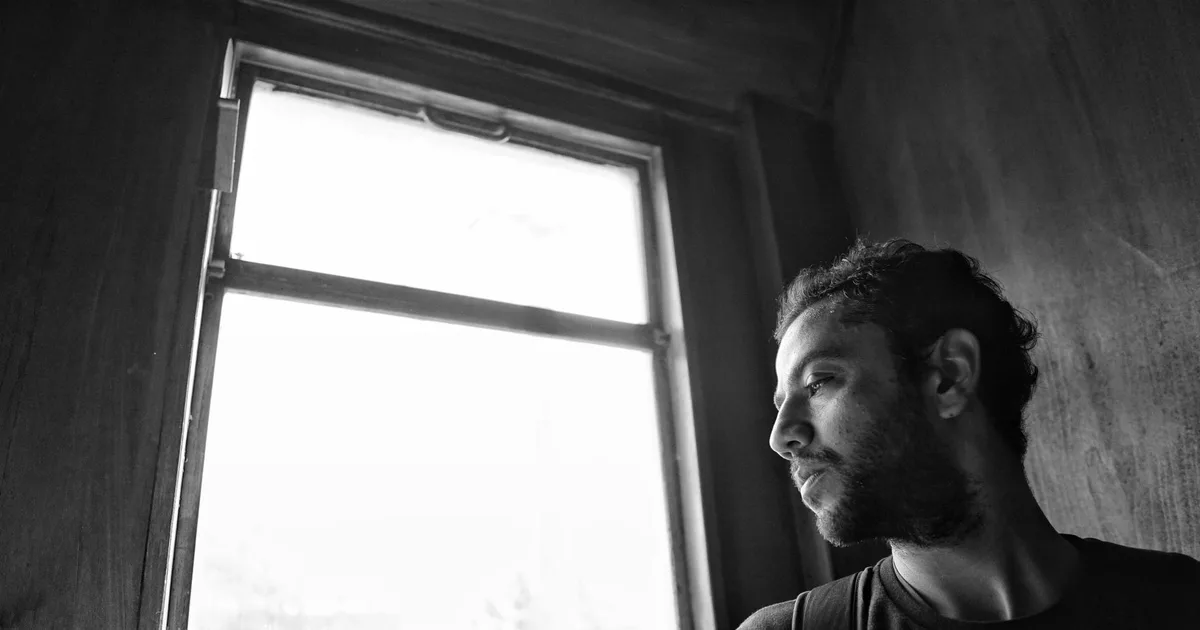
In the weeks after reading it, I had two parallel reactions. On one side, real relief. The idea that my ADHD isn't a chronic disease for life but an imbalance with a history, so with room to move, did me good. For the first time since the diagnosis, I wasn't in a rush to fix myself.
On the other, a wave of retroactive sadness. Mate describes with precision mechanisms I lived through as a child without having the words. The sense of being alone with my emotions. The automatic disconnection. Early shame. Reading those pages was like finding childhood photos I'd rather have left in the box. Useful, but heavy.
Practically, since the reading, I use the word "self-parenting" more often when I talk to myself. When I catch myself attacking my own head because I forgot an appointment, I ask what a good parent would say to a child who talks to themselves like this. It defuses. Not every time. But more often than before.
My criticism: what I didn't like, and what feels dated
The book is 27 years old. ADHD neuroscience has moved since. Mate downplays the genetic part in a way that's hard to defend today, given the 2021 international consensus (Faraone et al.) putting heritability at about 74%. He would likely have nuanced this if he were writing the book in 2026.
Second thing: despite his repeated warnings, the tone on the parental role can read as accusatory. If you're the parent of an ADHD child, some pages will hit at a bad place. Mate owns this tension and describes his own shortcomings as an overworked young father. It's still hard.
Third thing, and to me the most solid criticism: the book is excellent on the why, almost empty on the how. Mate describes mechanisms in depth, practices almost not at all. If you want concrete tools to handle daily life with ADHD (visual calendar, externalizing working memory, managing overstimulation), look elsewhere. Hallowell and Ratey in ADHD 2.0 are far better on that.
Last thing: Mate barely covers ADHD in women, says little about severe traumatic comorbidities outside the family frame, and writes from a very Anglo-Saxon middle-class viewpoint. It's a book of the 90s, and it shows.
Who it's for, and who it isn't
Read it if you've just received your adult ADHD diagnosis and want to understand your experience from the inside, not in clinical terms. Read it if you have anxious attachment, or grew up with loving but stressed parenting, and want to connect those threads. Read it if you're tired of books that describe ADHD as a disease to correct.
Don't read it if you want a practical guide with exercises and worksheets. Don't read it if you're the parent of an ADHD child in a fragile emotional period, some pages may hit at the wrong time. Don't read it if you want the current scientific consensus on heritability, the book is too old for that.
For complementary reading, see the ADHD books I recommend, or watch Russell Barkley's free lectures for the opposing view on genetics. You can also find the book on Amazon if you want to order a copy.
References
- Mate, Gabor. Scattered Minds: The Origins and Healing of Attention Deficit Disorder. Knopf Canada, 1999 (revised edition, Vintage Canada, 2019).
- Faraone, S. V., et al. "The World Federation of ADHD International Consensus Statement: 208 Evidence-based conclusions about the disorder". Neuroscience & Biobehavioral Reviews, vol. 128, 2021, pp. 789-818. pubmed.ncbi.nlm.nih.gov/33549739/
- Hallowell, Edward, and Ratey, John. ADHD 2.0: New Science and Essential Strategies for Thriving with Distraction. Ballantine Books, 2021. Recommended as a complement for the concrete tools Mate doesn't provide.